

***Last updated June 2026***
By VibeIncome, an online business expert with 8+ years of experience.

Being an entrepreneur often comes with long hours, constant decision making, and a never ending list of things to get done. I know from experience that keeping my mind sharp and focused isn’t always easy, but I’ve found that adding a few mindfulness practices into my routine has made a real difference. Whether you’re building a startup or growing a small business, these mindfulness techniques can help you keep your cool and even give a boost to productivity. Here’s my take on five mindfulness practices every entrepreneur should try, plus some practical tips to fit them into even the busiest workday.

Why Mindfulness Matters for Entrepreneurs
Mindfulness has recently had a surge in popularity – but its really an ancient practice that serves best when practiced regularly; it’s a set of simple mental habits that help you stay present and feel less overwhelmed. I used to think mindfulness was all about meditation retreats or silent rooms, but it turns out you can put it to work just about anywhere, including your own backyard or a quiet corner of the house. Research even suggests that entrepreneurs who use mindfulness enjoy better focus, less stress, and improved decision making (Harvard Business Review). The fast-paced world of business makes it easy to get swept up in constant thinking or worrying about the future. Mindfulness helps you pause, see things clearly, and be more intentional with your time.
Big names like Arianna Huffington and Marc Benioff have both gone on record about the benefits of daily mindfulness in their entrepreneurial lives. It’s aids in more than just stress relief; it’s a toolkit for handling tough decisions, bouncing back from setbacks, and fuelling creative problem solving. The skills you gain while practicing mindfulness serve well in all walks of life.

5 Simple Mindfulness Practices That Boost Productivity
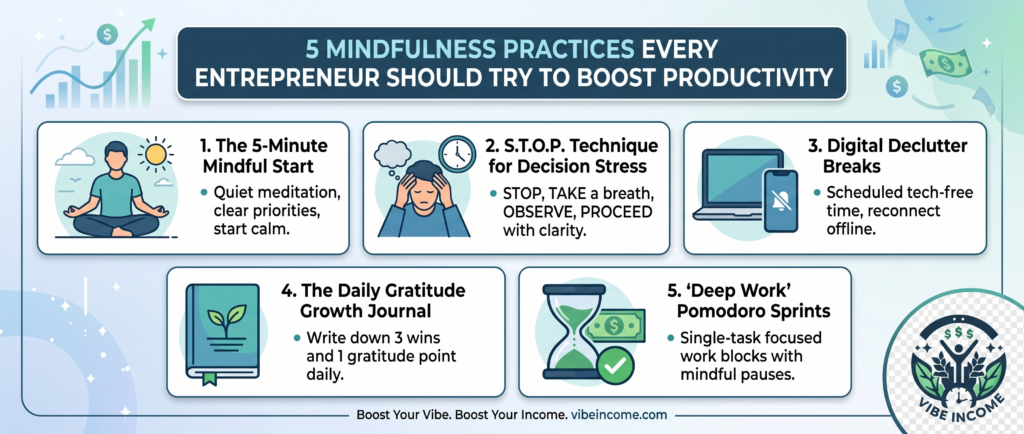
Even if your schedule is packed, these five mindfulness techniques blend nicely into your day. Each one helps in a specific way—whether it’s tackling mental clutter, keeping energy high, or finding a fresh perspective. Here’s what I recommend checking out.
- 1. Mindful Breathing
This is one of the easiest ways I’ve found to quickly reset my mind. Try slowing down for a minute, closing your eyes, and paying attention to your breath going in and out. If you notice your thoughts wandering (and they will), gently bring your focus back to your breath. Even two or three minutes can calm racing thoughts, which is super handy before heading into a stressful meeting or right after getting bad news.
- 2. Focused Attention Sessions
Mindfulness is about being “here and now,” and I’ve found single tasking—deliberately doing one thing at a time—to be powerful. Set a timer for 20 or 25 minutes, turn off notifications, and give one task your full attention. This approach, also known as the Pomodoro Technique, works best if you also build in short breaks. I love how it helps me move through my todo list more efficiently and with less stress. I can usually be found doing multiple things at once, and while I often enjoy that organized chaos it’s usually not actually the most efficient, healthy, or productive way to get through tasks.
- 3. Walking Meditation
If sitting still isn’t your thing, walking meditation is worth checking out. During a stroll, bring your attention to the sensation of your feet touching the ground or the sounds around you. This works great during lunch breaks or whenever you need a creative boost. I often walk around the block when I’m stuck on a business problem; I usually come back with new ideas and better focus. Fresh air does wonders, so does a little sunlight and keeping your attention focused in the moment instead of wandering to the 100 other things in life that are on the go at any given time.
- 4. Gratitude Journaling
It’s easy to focus on what’s going wrong, but jotting down three things I’m grateful for at the end of the day always helps switch up my mindset. Over time, this practice helps me notice wins, however small, and keeps me motivated through tough seasons. Keeping a gratitude journal by my desk is a simple way to keep negativity from taking over. It doesn’t have to take up a lot of time or energy, but I think you’ll find the impact it has provides a much greater payoff than the effort required would suggest.
- 5. Mindful Email and Communication
Mindfulness doesn’t stop when you hit send. I’ve found that pausing to read an email twice before responding or taking a breath before calling a client helps me avoid writing something I’ll regret or getting defensive. Practicing mindful communication means being completely present when listening and speaking, which builds stronger relationships with team members, clients, and partners. Taking a few moments to fully consider the situation often allows for better decision making and communication.

Easy Ways to Build Mindfulness Into Your Day
Adding mindfulness to a busy routine can sound intimidating, but it doesn’t have to eat up a ton of time. Most of these practices take just a few minutes. I usually schedule reminders on my phone to stand up and take a breathing break or go for a quick walk. Even simply putting your phone on “Do Not Disturb” mode while you tackle your first big work task is a form of mindfulness.
It’s also helpful to link mindfulness to habits you already have—try taking three slow breaths every time you sit down with your morning coffee, or jotting one thing you’re grateful for during your lunch break. Over time, these tiny moments add up and can rewire your brain to be less reactive and more resilient (NCBI Study).
Roadblocks and How to Handle Them
Like most entrepreneurs, I’ve run into a few bumps when trying to build mindful routines. Here are some common hurdles and ideas on how to deal with them:
- It feels like another thing to do: Start super small. Even one minute of mindful breathing is worth it and becomes easier to build up to 5 or 10 minutes over time.
- It’s tough to focus: Minds wander, especially when you’re juggling a lot. Remind yourself that noticing distractions is all part of the process.
- Breaking old habits is hard: Attach new mindfulness practices to things you already do, like lunchtime or your morning routine.
- Results aren’t instant: Changes build up over time. Give yourself credit for any effort; progress counts, not perfection.
I used to feel guilty if I missed a day or got distracted. Now, I’m learning that just making the effort is what matters most. If you’re interested in going deeper, plenty of mindfulness apps—like Headspace or Calm—offer short, guided practices tailored for busy people. Full Catastrophe Living is also a great book to look into – it goes over the benefits of mindfulness, how to get started, and a lot of real life examples showing the potential benefits including lowered blood pressure (it is centredd around a mindfulness based stress reduction program).
Walking Meditation Tips
This practice deserves special mention because of how easy and adaptable it is. I often use walking meditation during the workday as a mood and energy reboot. Here’s a method I use:
- Find a safe, quiet path—even down a hallway will do, but personally I prefer a quiet stroll outdoors.
- Focus on each step, noticing how your foot lifts, moves, and touches down.
- Breathe naturally, matching your breath to your steps.
- If you get distracted, gently bring your focus back to stepping and breathing.
Walking meditation works well before a pitch, meeting, or any stressful moment. Even five minutes can help you feel refreshed, less stressed, and more present.
Gratitude Journal Example
If you need ideas for starting a gratitude journal, here’s what a typical entry might look like for me:
- Appreciation for a helpful conversation with a collaborator.
- Feeling grateful for a healthy lunch that kept my energy steady.
- Thankful for finding a simple solution to a tech problem that’s been bugging me.
- A note about how lovely the sounds of nature were on my most recent walk.
Simple, realistic, and straight from daily life—this practice eventually trains your mind to look for things that work, not just what’s going wrong. You don’t need a fancy journal by any means, but I find I enjoy it most when I have a nice clean and pretty one to open each day.
Mindfulness and Entrepreneurship in Daily Business Life
Modern entrepreneurs face a lot of information overload and tough calls every day. Mindfulness practices aren’t about escaping reality; they help you stay aware and steady so you can act instead of just reacting. I’ve found that these techniques lead to clearer priorities, better work life balance, and a more positive mindset (which is backed by science too- not just my personal experience). Over time, they also support better health by lowering stress hormones and reducing the risk of burnout.
It’s not about being perfect or “zen” all the time. It’s about giving yourself a break, staying real, and using your attention as your true superpower. If you’re craving a bit more focus, need better sleep, or just want to get through the day feeling a bit more at ease, these mindfulness techniques are worth experimenting with.

Frequently Asked Questions
Here are answers to questions entrepreneurs often ask about mindfulness and productivity:
Question: How do I know if mindfulness practices are actually working?
Answer: Check in with yourself: Are you feeling a little less stressed, more focused, or noticing small wins? Has your sleep, digestion, or blood pressure improved? These are all good signs. Most benefits build slowly over time.
Question: Do I have to meditate every day?
Answer: Daily practice helps more, but even using techniques a few times a week can be helpful. It’s all about finding what fits your life. Just get started – something is better than nothing!
Question: Are there any business focused mindfulness resources?
Answer: Yes! Books like “Search Inside Yourself” by Chade-Meng Tan and apps such as Headspace for Work or Calm Business offer programs built for workplace use.
Question: I worry I’ll get bored or distracted. Is that normal?
Answer: 100% normal. Minds wander, just gently bring your attention back each time. Over time, it gets easier to stick with it.
If you’re curious, give one or two of these techniques a shot this week. Mindfulness isn’t about changing who you are. Instead, it’s about making your workday a bit more manageable, productive, and enjoyable. The benefits are real, and it’s a small investment of time that pays off in clarity, creativity, and calm.
Thanks for reading! If you enjoyed this article please leave us a comment and check out some of our others! E-mail is monitored twice weekly if you would like to contact us with any content requests, questions, or advertising inquiries please do so at contact@vibeincome.com
last update: June 2026 – please feel free to request another update via e-mail if you feel new information may be available!
About The Author
