

***Last updated June 2026***
By VibeIncome, an online business expert with 8+ years of experience.

Building a blog in college can seriously level up your side hustle game. It doesn’t matter if you want to share your own take on study tips, review tech gadgets, or create content about your favourite hobbies, blogging can help you build real communication skills and even bring in steady cash. The toughest part is figuring out where to begin, especially while juggling classwork and everything else campus throws your way. This guide lays out each step, from your initial idea to turning your college blog into a legit source of profits, and you won’t have to burn out in the process.
You are at a major advantage being of an age that grew up with technology though! If you want to fully utilize an entirely integrated platform that keeps the best of AI, and kicks out the worst to maintain the human touch I recommend you check out the massive overhaul that came to Wealthy Affiliate in October 2026, they really are the only place at the forefront right now that houses everything you need to build a successful online business or blog, and lets you try it out for free.

Why Blogging Is Actually Worth It For College Students
College life is the ideal playground for blogging. You’re surrounded by unique experiences, fresh ideas, and inspiration that people outside of campus just can’t get. Blogging isn’t just a creative outlet, it helps you connect with like-minded folks, start building a digital portfolio, and grow an audience that might even give you an edge when applying to internships or freelancing gigs down the line.
Plus, starting a blog means picking up digital skills that employers are hungry for, including content writing, social media marketing, and search engine optimization. Many platforms are super easy to use, so there’s barely any upfront investment. When you add in the chance of making money from ads, sponsored posts, or affiliate links, blogging definitely steps up as both a resume builder and a money-maker.
But there’s more—blogging also helps you find your own voice and gain confidence in sharing your thoughts. As you keep writing and connecting with others, you’ll find a supportive blogging community that cheers on fellow students and helps you brainstorm fresh content ideas.

Getting Ready: Decide What You Want To Blog About
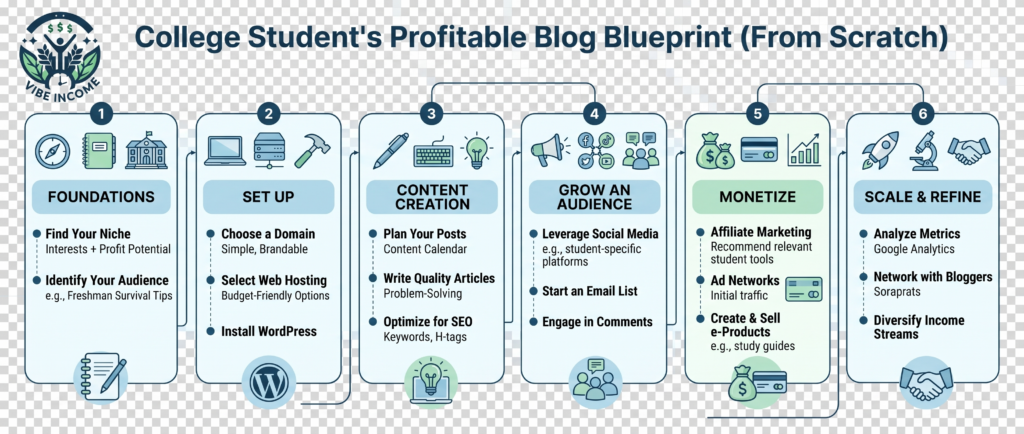
Nailing down a topic or niche early on is super helpful. It stops you from feeling stuck or running out of things to write about, without making you feel boxed in. Here’s what works best for most people:
- Passion: What topics make you want to talk for hours?
- Knowledge: What do your friends always ask you about? Maybe you’re great at study hacks, gaming, or cooking five meals from a single box of pasta.
- Potential Audience: Who else cares about this topic? Check out student forums, social media pages, or talk to classmates to see if there’s already some buzz.
- Room for Monetization: Is your niche connected to products or services you can review, recommend, or promote—opening up affiliate earnings?
Popular picks for college blogs include college survival guides, time management and productivity, campus event reviews, wellness, or cheap eats near campus. Choose a subject you enjoy and that already has an audience looking for answers or inspiration.
Don’t stress too much about being super-specific at first. You can always switch things up later if you want to branch out or notice your audience is loving a certain type of post.

Setup Basics: Choosing a Platform & Domain Name
This step stops a lot of would-be bloggers, but it really doesn’t have to be overwhelming. For anyone just starting out, platforms like WordPress.com, Wix, or Squarespace offer simple, budget friendly plans for students and pre-made templates. If you want more control and the freedom to make money, you might want to try self-hosted WordPress (WordPress.org), which many pro bloggers favor. If you want easy and cost effective with good site support then I always recommend Wealthy Affiliate.
Your domain name is important—it’s like your online calling card. The best ones are short, easy to spell and remember, and clearly connect to your blog’s focus. You can even use your own name if personal branding is your goal. Registering a domain is usually the only up-front cost and you can often snag student discounts or bundles through Namecheap or Google Domains.
Still not sure where to start? Check out my article on how to find the best web hosting service for you (and you can even purchase domain names there too)!
Quick Guide: Launching Your College Blog in 5 Steps
Breaking your launch into bite-sized steps makes it less scary. Here’s your college blogger’s checklist:
- Pick a Platform: Decide if you want to blog on WordPress, Blogger, Wix, or Squarespace—see what looks easiest and fits your goals.
- Choose Your Domain Name: Make sure it’s unique and available. Namecheck tools come in handy for this.
- Set Up Hosting: If choosing self-hosted, grab a hosting plan (SiteGround, Bluehost, or HostGator are classic options for students with decent deals).
- Select a Template: Pick a clean, mobilefriendly look to start. Branding and fancy custom touches can come later.
- Publish Your First Posts: Write a solid intro, share your story, and give readers a taste of what’s to come. Aim for two or three helpful posts before your official launch.
Once your blog’s live, you’re ready for the real creative part: writing posts, tweaking your style, and showing it off.
Monetization: How College Bloggers Actually Make Money
Turning a blog into a source of cash isn’t instant, but lots of students are surprised by what’s possible by sticking with it. Here are the most common ways students make blogging pay off:
- Ads: Sign up for Google AdSense or Media.net, place ads on your blog and make money per view or click.
- Affiliate Marketing: Share honest reviews or recommendations of products with affiliate programs (like Amazon Associates) and score a commission on sales through your links.
- Sponsorships: With a growing audience, companies might pay you to feature their products or events—sometimes with cash or sometimes with free stuff.
- Digital Products: Sell your own guides, checklists, or planners. Study trackers or campus cheat sheets are popular digital freebies and paid products.
- Freelance Opportunities: Show off your skills to land paid gigs in writing or marketing, using your blog as your resume in action.
Most student bloggers start with display ads or affiliate links since they’re quickest to set up. As your audience grows, you can branch into digital products or collaborations that really match your readers’ interests, making your blog even more valuable.
Challenges & How To Keep Your Blogging Momentum Strong
The hardest part for new bloggers is the early stage—traffic and earnings are slow, and it’s easy to get discouraged. Here’s how to avoid burnout and keep things moving:
- Time Management: Slot blogging work into your calendar around classes and campus events, keeping realistic expectations to avoid last-minute panics or late nights.
- Batch Content Creation: When you’re feeling motivated, write a few posts at once. This helps manage your schedule and ensures you always have something ready to publish.
- Track Your Progress: Celebrate each milestone—whether it’s your tenth post, your first comment, or hitting 500 page views. Little wins matter.
- Network With Other Bloggers: Team up for guest posts, share each other’s content, and join Discord or Facebook groups with other student bloggers to get feedback and ideas.
- Don’t Sweat Perfection: It doesn’t have to be flawless. You can edit as you go, so just start posting and polish things later.
Advanced Tips For Taking Your College Blog To The Next Level
If you’re ready to set your blog apart and build a loyal following, give these strategies a try:
- Search Engine Optimization (SEO): Learn basic keyword research and how to use them in your post titles and content, so more students pick up on your blog in Google. Moz and Neil Patel have excellent beginner guides.
- Email Newsletters: Offer a free resource, like a study checklist, to readers for signing up, and then send helpful updates or campus tips every week or two.
- Partner With Campus Groups: Work with student organizations, local businesses, or campus newsletters on special features, interviews, or guest columns to broaden your audience.
- Repurpose Your Content: Turn longer posts into Instagram stories, TikToks, or quick YouTube vlogs—spread your message further on social media to catch new eyeballs.
- Never Stop Learning: Keep checking out what’s trending or shifting in your niche. Don’t be afraid to jump in and try out fresh tools, topics, or content formats.
Gear & Tools For Budget-Friendly Student Blogging
You don’t need expensive gear to make your blog stand out. These affordable (or free) tools will keep things running smooth:
- Laptop or Tablet: Anything comfortable for writing posts, browsing online, and basic image editing is enough.
- Free Design Platforms: Canva, Figma, or Adobe Express can give your graphics a boost for zero dollars.
- Basic Editing Apps: Use Grammarly or its browser extension to catch spelling and grammar mistakes before posting.
- Free Stock Photo Sites: Grab visuals that match your topics from Unsplash or Pexels—no worries about copyright.
- Google Analytics: This powerful, totally free tool lets you track what’s working with your blog and understand your audience better.
Start with these, and as your blog grows, you’ll get a feel for what more you might need.
Frequently Asked Questions
Curious about the details? Here are a few quick answers for new student bloggers:
How long does it take to make money with a college blog?
It usually takes at least a few months of steady posting to hit enough traffic for real ad or affiliate earnings. Consistency is key, and the more often you post, the faster those numbers add up.
Do I need to know how to code to set up a blog?
Definitely not. WordPress, Wix, and similar platforms are built for people without coding skills, using templates and drag-and-drop editors to keep things simple.
What topics tend to do well for college student blogs?
The most popular ones include survival tips, time management, dorm room ideas, student-friendly eats, nightlife recs, and ways to save money as a student.
Can I blog anonymously?
Sure thing! Many students use a pen name, especially if sharing personal or controversial topics. Just stay aware of your campus’s social media guidelines so you don’t get in hot water for opinions or stories you share.
One More Thing
Blogging as a college student is a low-risk, high-reward move to make connections, boost your skills, and open doors for the future. You don’t have to spend a lot or have everything perfect at first—just test ideas, stay patient, and have fun. You might be surprised by how much you learn and the confidence you build along the way, not to mention bringing in some extra cash on the side.
Thanks for reading! If you enjoyed this article please leave us a comment and check out some of our others! E-mail is monitored twice weekly if you would like to contact us with any content requests, questions, or advertising inquiries please do so at contact@vibeincome.com
last update: June 2026 – please feel free to request another update via e-mail if you feel new information may be available!
About The Author

Hi, thank you for sharing this great article. I appreciate the useful information and practical insights you’ve provided. Keep up the great work, and I hope to read more of your posts soon.