

***Last updated June 20th, 2026***
By VibeIncome, an online business expert with 8+ years of experience.

SEO optimization for affiliate websites is undeniably important if you’re looking to boost traffic and turn impressions into clicks, and clicks into real income. A well optimized affiliate site has impacts beyond helping you rank above the competition, it also offers a smoother, more helpful experience for your visitors (which is the ultimate goal really). Whether you’re just getting started or want to brush up on the basics, this is what really matters for affiliate SEO today (in 2026).
Why SEO Matters for Affiliate Websites
Affiliate marketing has exploded in the past decade. More people are getting into it because it offers a way to earn passive income without worrying about product creation or inventory.
There are a couple major benefits to affiliate marketing that are starting to matter enough for people to take notice:
1)You really don’t actually deal with the customers much at all in regard to back and fourth communication – just provide good quality content for them to use to help inform decisions. This provides so much more time freedom and so much less conflict and homan management than a lot of other businesses.
2) Your start up and maintenance costs are incredibly low. Not having to create or store inventory, pay employees to keep the business operating enough hours to generate sales, and just generally having a low overhead can be a huge advantage in the early stages when a business is first launching and not yet making much back.
The web is crowded with affiliate sites, though, and many share the same products and content themes. Ranking high in Google or other search engines makes a massive difference; your site needs to be easy to find and trustworthy to attract those valuable clicks.
The thing most people don’t realize is that real value is what actually ranks – you can’t just spit out a bunch of AI junk and expect to be or stay successful; the human touch is irreplaceable.
SEO for affiliate sites isn’t just about packing your posts with keywords. Search engines now focus a lot on user experience, content quality, page speed, and genuine authority. By following good SEO practices, you’re setting up your site to compete for top spots, improve conversions, and even get better partnership offers from affiliate programs. According to Backlinko, over 53% of all website traffic still comes from organic search, so tapping into that potential can make a pretty big difference.

Starting with the Basics: Core SEO Elements
I follow the same basic steps and rules when starting a new website, regardless of the niche, and I recommend you try it too. To build a strong foundation, you’ll want to focus on these key SEO factors right from the beginning:
- Keyword Research: Find out what your audience is searching for so you can meet them where they are. Ideally you choose keywords that are commonly searched but still fairly low competition – this often means targeting some more specific/longer keywords in the beginning until you’ve built up some authority. This site has several posts to help improve your keyword research should you want to dive in further you can use the search bar on the right to pull them up.
- On Page Optimization: Tweak your content, titles, meta descriptions, and URLs to be clear and relevant. While search engines may still change what they display it can help to present your best foot forward for them!
- Mobile Friendliness: Make sure your site looks sharp and loads fast on every device. Google cares, and your audience does too! This can often be achieved fairly easily just by choosing a WordPress theme that is compatible with mobile use. If you’re doing the coding yourself it becomes a lot more complicated so I tend to recommend borrowing someone else’s expertise in that area unless you’re highly proficient – there are just so many screen sizes and resolutions these days that its not as easy to code your own site as it was 15 years ago when you only had to make it look good on a computer screen.
- Site Speed: Use tools like Google PageSpeed Insights to find and fix anything slowing down your site. This one can be a bit of a nightmare of trial and error to get an appropriate speed if you don’t have spectacular hosting to help you out, but I find site speed does make a difference and is often worth playing around with your image volume and plugins to try and improve it.
- Internal and External Linking: Guide visitors to your best pages and link out to trusted sources for added value. This one is huge – it’s really how search engines understand your website, authority, and value, along with who your target audience really is!
These basics are the heart of any SEO plan. They aren’t always flashy, but getting them right gives you real staying power and no-one wants to be wiped out by the next big update when it can be avoided by providing the right value and setup to start with.
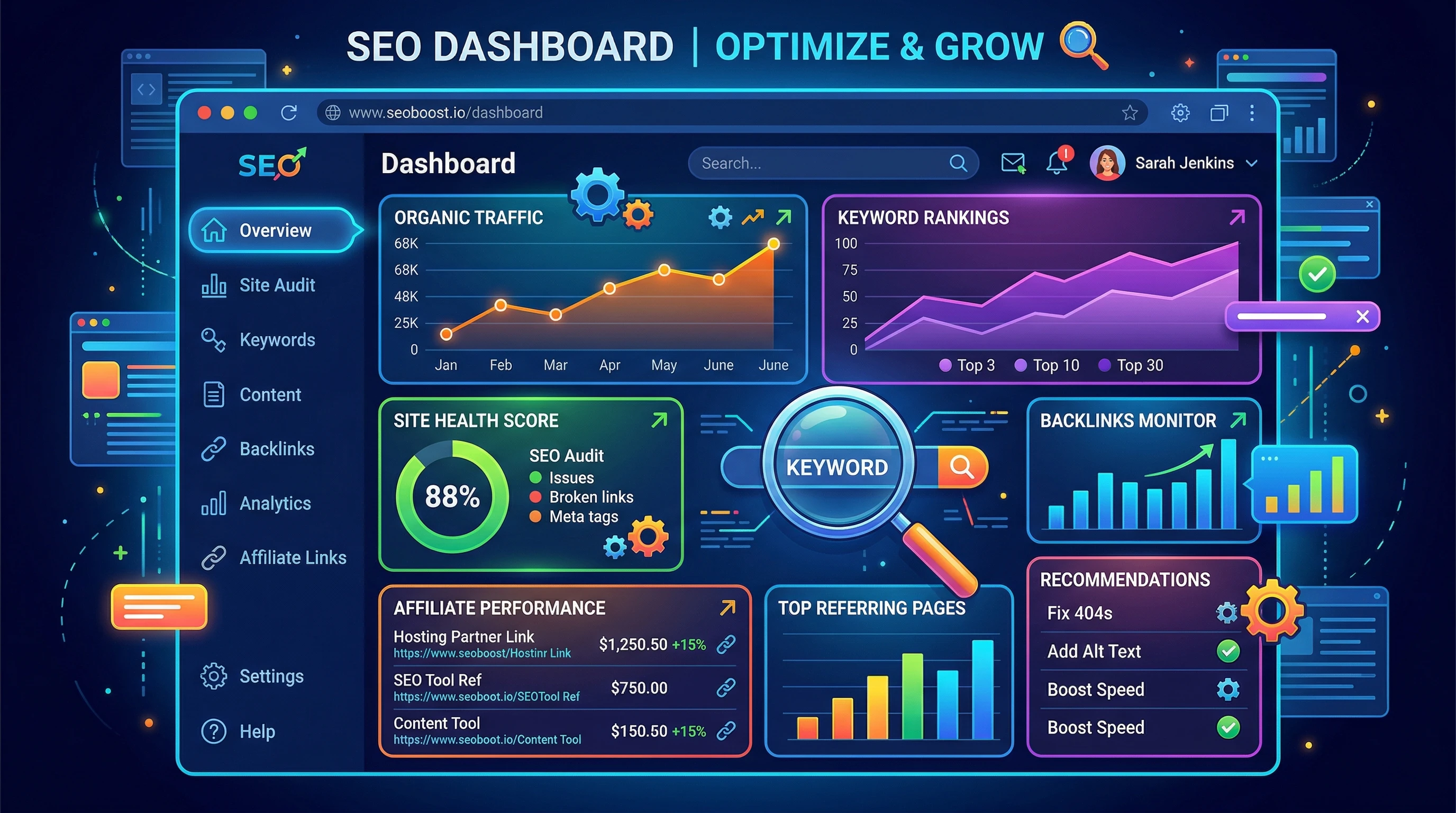
Proven Steps for Affiliate SEO Success
Affiliate SEO can get technical fast, but here’s a straightforward playbook you can follow to set things up for growth:
- Pick a Profitable Niche: Choose a topic that isn’t too crowded but still has good audience demand. Tools like Ahrefs, SEMrush, and Google’s Keyword Planner help you spot what’s popular and how competitive a niche is. When you’re just starting out it’s generally best to avoid YMYM (your money, your life – or basically anything to do with health and wellness or finances), choose a topic that you’re already a bit of an expert on and then continue to learn and grow as you develop your website. If it’s the first time you’ve ever tried to make an income online then you’re probably not yet qualified to be teaching others about the topic just yet!
- Research Buyer Intent: Focus on keywords people use when they’re ready to take action (words like “best,” “review,” or “buy”). If you can choose keywords farther down the buyer journey to funnel you’ll be way ahead of many – people searching for review on a specific product are probably already much closer to buying than those just looking up general knowledge on the topic that product is able to assist with.
- Create Keyword Clusters: Group related keywords together so you can cover topics more fully and rank for more search queries. This also allows you to do more internal linking within your website which can be super valuable down the line.
- Structure Content Properly: Use H1 for page titles, H2/H3 subheadings for sections, and keep paragraphs short and easy to read. That’s good for SEO and user experience! I also find people tend to prefer reading pages with substantial white space in it – no one should ever be wondering what paragraph they’re on because everything is too crammed together to clearly differentiate.
- Optimize Affiliate Links: Use clear, descriptive anchor text for your links. Cloak affiliate links if allowed, and always disclose relationships honestly. Make sure that you look at the policy of each affiliate program, some (like Amazon), have very specific wording for the affiliate disclosure, others are happy as long as you remain FTC compliant.
- Add Helpful Extras: In depth reviews, comparison tables, answer boxes, and FAQs can keep visitors engaged longer and give your pages more authority. Anywhere that you can provide true value to your audience is a worthwhile addition. Try to provide something that they can’t already find elsewhere online – that is often your personal experience with what you are selling or talking about!
Getting these basics right will help you earn authority and trust, while improving your chances of ranking for valuable keywords. The upgrades coming to WA in October 2026 set you up perfectly to help build out an ideal online business that is SEO optimized and fully relevant to your niche, goals and voice! Also, keep networking with fellow affiliate marketers—online forums and communities can clue you in to the latest changes and effective tactics for your niche. Plus, it’s always nice to have some like-minded and supportive people in your corner!

Don’t Overlook These Affiliate SEO Considerations
Not every tactic works the same in the affiliate world, and there are some pain points that catch many beginners off guard:
- Duplicate Content: Many affiliate marketers are tempted to copy product descriptions straight from merchants. Search engines won’t give you a boost for that. Always write your own unique, valuable content. The legal implications are also important to consider – if you create your own content then you’re both providing more value and not risking copyright infringement. This is also something you have to watch out for as you grow – particularly with AI scrapers these days – sites can be wiped out and shadow-banned for too much duplicate content (even if you’re actually the original creator) so keep an eye out that your pages aren’t being cloned by someone else either!
- Thin Content Pages: Pages that exist just to drop affiliate links without real info or value often get ignored by search engines. This not only means they don’t show up, but it also brings the overall quality and authority of your site down making the best pages seem less attractive to search engines as well. Adding real opinions, pros/cons, usage tips, and custom media like images or videos makes your posts more useful and helps you stand out.
- Too Many Ads or Popups: Packing your site with too many affiliate banners or intrusive popups can hurt both rankings and user trust. A cleaner, less cluttered look typically keeps visitors around longer. This goes without saying, but finding the appropriate balance for both profitability and user experience is a bit of an art in and of itself and you will likely need to spend some time perfecting it as the ratio that performs best varies a lot.
- Google’s Site Quality Checks: Affiliate websites are getting extra attention, especially after updates like Google’s helpful content and product review guidelines. Your content needs to be original, trustworthy, and truly helpful for people trying to make buying decisions. Basically if you would read it to learn about the topic it covers you’re probably doing well, but if you’d be embarrassed to show it to your idols then it may be time to step it up and improve the quality.
Unique Content and Real Opinions
Every search engine update puts a bigger spotlight on content written by people with hands on experience. If you’ve tried a product yourself, share your real thoughts, photos, videos, or usage stories. This is called E-E-A-T (Experience, Expertise, Authoritativeness, Trustworthiness) and it’s a big deal right now for affiliate SEO. Simply spinning merchant photos or restating specs won’t go as far as sharing results from your own use. Real opinions always make your content stand out, even against established competitors.
I like to create my own image to go with each post and include my logo on it so that it’s not easy for someone else to just save and paste onto their site too. I also like to include some personal experience on product reviews and I have usually already formed an opinion on the product I’m discussing anyways and can provide a fairly good overview of the pros and cons. It’s super important that the reviews are honest and show both sides of the coin – no product is perfect in every was so highlight both the positive and negative and then each reader can decide whether or not its an appropriate fit for what they’re looking for.
Site Speed & Mobile Usability
Mobile performance can make or break your rankings. Tools like PageSpeed Insights and Google’s Mobile Friendly Test quickly point out fixes for faster loading and better usability on phones and tablets. Compress images, cut down on redirects, and choose a responsive site theme—you’ll boost rankings and user satisfaction. This does end up being a little more complicated than it sounds at first and I tend to recommend perfecting content before worrying abut optimizing speed for that reason. It is still very important, but at the end of the day load times are pretty fast overall and I find providing a lot of value to the reader still trumps and instantly loaded page that isn’t as great.

Helpful Advanced SEO Tips for Affiliate Sites
Once you’ve got the basics, there are some more advanced skills I’ve found really useful and important to develop for success in digital sales:
Build Backlinks Smartly: Reach out to other blogs or sites in your niche for guest posts or resource mentions. High quality backlinks show search engines your authority and can seriously lift rankings. Make sure you go for other quality website though – low quality backlinks can look spammy and have the opposite of your intended effect!
Use Schema Markup: Take advantage of Product schema, Review schema, and FAQ schema to let Google show rich results like stars, FAQs, or price info. This kind of extra detail grabs attention in the search results. I tend to do this one last – it’s super important but also doesn’t take all that long and you need strong content quality before you’re able to create a good schema markup anyways.
Refresh Your Content: Regularly update your best posts to cover new details, latest product releases, and recent reviews. Search engines and your readers both prefer fresh, accurate info over older pages. An up to date website is way more helpful to your readers than an old dated on it. I tend to aim for a solid 50 posts to start, and then switch to a 50/50 ratio of updating and creating new content to ensure everything I have published stays fresh and relevant.
User Experience Matters: Your menus should make sense, categories should be logical, and it needs to be easy for users to find what they need. Longer visits and lower bounce rates also give you extra points with search engines. I find having a simple menu up top and an easy to find search bar, along with a page that groups posts by category to be the most efficient way of creating an easy user experience.
Real World Examples of Affiliate SEO in Action
A hiking gear review site I looked into took several SEO actions that delivered a solid increase in search traffic. Here’s what worked:
- Writing all product reviews using real field testing, including original photos and comparison data. A product review made by AI probably isn’t something you would want to buy off of, so why would your audience. Make sure everything you output is of a quality that you’re proud of and would find helpful yourself if in the readers situation. This doesn’t have to mean you can’t use AI at all, but you do need to at least provide a very accurate and detailed prompt and then edit the output extensively to make it your own if you want the article to actually hold up over time. AI is improving quickly but straight AI slop does get weeded out with algorithm updates, and more importantly, can at times be just plain wrong – it pulls answers it finds online and has no way to verify whether or not they’re actually true so that needs to be your job for now or you could accidentally be misleading your readers!
- Building an FAQ section under every review to answer real questions visitors search for. This can be added as those questions start to trickle in if you prefer, but it’s definitely worth putting a little time into eventually. I like to start with 3-5 questions and then modify them a bit each time i update the post to keep the FAQ fresh and relevant to my readers current needs.
- Linking to other helpful articles inside each post—such as set up guides or “best of” lists—to keep visitors clicking around. Once again – internal and external linking is a game changer! If you have a well defined niche chances are you have already written on similar topics relevant to each new post and your readers may be interested in having a look through those articles as well so make sure you’re accessible and easy to find!
- Regularly checking site speed and moving to a faster web host when slow load times negatively affected rankings. Hosting can get expensive if you’re chasing the millisecond, so while this one is important, I tend to focus on content quality above all else at that is something that I can control for free while still providing a lot of value! You can still have a very successful website at a great price if clean page setup and content quality are the focus and speed is sufficient but not spectacular.
Sites that shine in affiliate SEO almost always put honest, real world info first and focus more on helping people than just pushing for a sale. Long form reviews and comparison tables are also useful, as are user generated stories. If you keep things genuinely useful, you’ll have a better shot at long term rankings.

Common SEO FAQ for Affiliate Websites
Affiliate marketers, especially those just starting, have lots of questions about what works best for SEO. Here are a few I hear often:
Question: How many affiliate links are too many?
Answer: There’s no magic number, but only include links where they help your reader. Pages stuffed with links can look spammy to both users and search engines. Focus on relevance.
I like to place my link a few times throughout a product review as the reader is clearly interested in purchasing already if they’re looking for a review. Otherwise, I tend to go with just one or two relevant links per page, and often those are actually just links to other reviews I have done rather than directly to the product. I save most of my linking for helping readers find other relevant posts on my website that they may be interested in (internal linking).
Question: Do I need to disclose affiliate links?
Answer: Yes. FTC rules (in the US, Canada, and similar rules elsewhere) call for clear disclosures whenever you use affiliate links. Nothing should be deceptive and the client should absolutely always realize that they are about to click off onto another site, and that you will earn a commission if they purchase through your link within X amount of time. This is non-negotiable for appropriate compliance these days, and rules aside, it’s just the honest way to do business.
Question: Is it better to focus on one big niche site or small, focused micro sites?
Answer: Both can work. Authority sites offer stronger long term potential, while micro sites can rank quickly for smaller niche topics. Pick what fits your interests and available time. The most important thing is that you stick to one long enough to truly see what is and isn’t working, then adjust accordingly. I like to start with one and have a good foundation built before narrowing down substantially – your rankings often point you in the direction of your future micro-niche once you’ve given them some time to see where people want to go.
Final Thoughts: Staying Ahead in Affiliate SEO
SEO for affiliate marketing takes patience, plenty of trial and error, and a willingness to keep learning. Trends and search engine rules always seem to shift, so stay plugged into SEO news or online communities like Affiliate Secrets or Niche Pursuits. If you focus on providing real value and raising your site’s authority, you’ll be in the best spot possible for long term affiliate success.
Thanks for reading! If you enjoyed this article please leave us a comment and check out some of our others! E-mail is monitored twice weekly if you would like to contact us with any content requests, questions, or advertising inquiries please do so at contact@vibeincome.com
last update: June 20th, 2026 – please feel free to request another update via e-mail if you feel new information may be available!
About The Author
