
***Last updated September 2026***
By VibeIncome, an online business expert with 8+ years of experience.
If you spend your days chasing commissions and traffic spikes, you probably know how easy it can be to slide into burnout. Affiliate marketing has plenty of perks, like freedom, creative projects, and those satisfying payouts, but the mental pressure can sneak up fast. I’m sharing practical mental health tips based on years in the game, including small shifts that can make life a lot easier and help you bounce back from burnout.
What Burnout Looks Like for Affiliate Marketers
The pace can be relentless, whether you’re tweaking SEO at midnight or tracking conversions over coffee. Burnout isn’t just about feeling tired. It can show up as brain fog, low motivation, frustration with results, or even physical symptoms like headaches and trouble sleeping. I’ve seen it hit hardest after marathon weeks or when a campaign tanks, even though I’ve done everything right.
Affiliate marketers are especially at risk for burnout because we’re juggling lots of hats: content creator, analyst, social media manager, tech support, and more. This all-in-one role can leave you running on fumes, especially if you don’t carve out space to recharge.

Understanding the Mental Pressure of Affiliate Marketing
The stress behind affiliate marketing has some unique challenges. For starters, passive income isn’t actually “set it and forget it.” There’s always another update to make, new platforms to try, or switching algorithms to chase. It’s pretty common to:
- Work alone a lot: Days can slip by with little feedback or social connection.
- Face constant change: Platforms roll out new rules, product owners switch up commissions, and what worked yesterday might flop today.
- Compare with others: Seeing other marketers brag about their success in private groups or forums can leave you wondering why you’re not further ahead.
- Feel the “hustle guilt”: There’s a pressure to always be working, or at least thinking about work, because there’s always more that could be done.
It’s no surprise that some marketers start feeling stuck or wonder if this gig is really worth it. Recognizing these patterns is a smart first move toward making positive changes. Burnout doesn’t appear overnight; it’s a slow build. Pay close attention to your mood and energy from week to week. You’ll sometimes spot a burnout warning if you catch yourself muting notifications just to avoid handling basic tasks.

Practical Self-Care Habits That Actually Work
Taking care of yourself doesn’t have to mean expensive retreats or hours away from the screen. Here are simple habits that helped me keep my head clear and energy up, even when the pressure’s on:
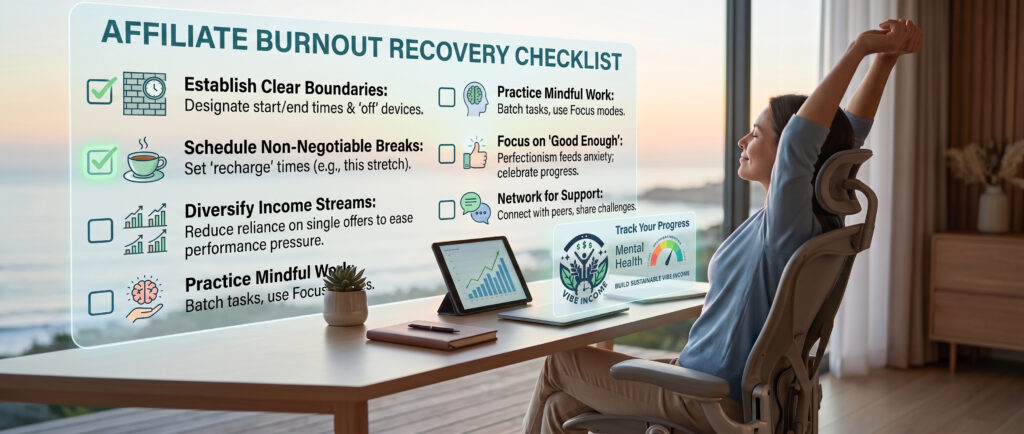
- Set real work hours: Block off when you start and stop for the day, and stick to it as much as possible. This helps you leave “work brain” at the desk instead of letting it spill into every part of your life.
- Move your body: Even a short walk or stretching break can reset your mood and give a boost to focus. I often step away after finishing a big task, and it makes a noticeable difference.
- Plan techfree time: Schedule parts of your week or even your day when you unplug completely. No stats checking, no notifications. Take a little space to recharge and let your mind decompress.
- Fuel up right: Consistent meals and hydration sound simple, but they support steady energy way more than powersnacking at your desk. If you forget to eat, setting a food timer helps.
- Create a “done” list: Writing down what you finish each day helps you see results and fight the feeling of never being productive enough.
Adding small rituals—like making tea before you start or choosing a calming playlist—can also mark work time versus downtime. It’s not about perfection; tiny changes add up.

Work Boundaries: Making Space to Recharge
I learned that hustling nonstop is a shortcut to exhaustion. Clear boundaries between work and downtime are really important. This includes things like:
- Not answering emails after hours: Let clients and partners know when you’re offline, and don’t apologize for it.
- Saying no to extra tasks: It’s okay to turn down projects that don’t fit your goals or current bandwidth.
- Using scheduling tools: Apps like Trello, Google Calendar, or even a simple planner make it easy to see what you’ve committed to and guard your downtime.
Sometimes I set up reminders on my phone, like “Stop working!” These little nudges help keep that line clear. A five-minute daily wind-down, such as closing open tabs or jotting tomorrow’s to-dos, can smooth the way into personal time and signal to your brain: it’s okay to rest now.
Mindset Shifts for Long-Term Resilience
How you think about your work makes a huge impact on your mental health. Affiliate marketing’s highs and lows can feel really personal, especially if you link your selfworth to income or site rankings. Here are a few mindset switches I find helpful:
- Focus on progress, not perfection: Social media shows everyone’s wins, but real growth often looks messy. I remind myself that small improvements add up over time, even if results come slow.
- Allow space for mistakes: Not every campaign will make money, and failures can be solid learning experiences instead of reasons to stress.
- Reframe comparison: Instead of feeling down about someone else’s wins, I use them as inspiration or a learning tool.
- Lower the pressure for constant growth: Overnight results are rare. I’ve let myself be in “maintenance mode” during trickier life seasons, and my business still survives.
Practicing self-compassion is another smart way to handle the inevitable rollercoaster. Celebrate your staying power as much as your wins.
Problem-Solving When Burnout Hits
Sometimes selfcare and boundaries aren’t enough, especially if you’re already running on empty. Here’s what I do when I recognize I’m reaching that point:
- Take a real break: Even if it feels like you can’t afford a pause, stepping away for even a day or two lets your mind reset. Traffic and commissions aren’t likely to disappear, and you return with more clarity.
- Reach out for support: Connecting with other marketers, joining mastermind calls, or just venting to a trusted friend helps break isolation and brings new solutions to light. Sometimes an outside perspective reveals a problem you’d missed.
- Do a task audit: Look at what you’re doing every day and drop or automate anything that isn’t moving the needle. Sometimes burnout comes from busywork rather than tough problems.
- Consider professional help: If burnout sticks around or builds up, talking to a coach, therapist, or mental health professional is worth it. There’s no shame in asking for help when things get overwhelming. The National Institute of Mental Health (NIMH resources) has resources worth checking out.
Red Flags: Signs You Need to Slow Down
Sometimes you don’t even realize you’re heading toward burnout until it’s already at your door. Some warning signs that should always get your attention:
- Work feels meaningless or pointless.
- Daily tasks start to pile up because you can’t focus.
- You start dreading opening your laptop or checking stats.
- You notice increased irritability, sleep changes, or neglecting regular meals and routines.
- Physical symptoms like headaches, stomachaches, or constant fatigue set in.
Catching these signals early gives you more time to coursecorrect and saves you from hitting the wall entirely. Notice if you stop caring about results or lose interest in tasks that used to be exciting—these changes matter.
Optimizing Your Workspace for Mental Wellness
Your workspace has a real influence on your focus and headspace. Here’s what I do to make my affiliate marketing corner more friendly to my mental health:
- Keep the work area tidy, even five minutes a day makes a difference.
- Add a plant or a splash of color to lighten the mood; you’d be surprised what a little green can do.
- Use a chair and desk that feel comfortable. Tiny ergonomic upgrades can ease physical stress and trigger better mental focus, too.
- Put a notepad nearby to clear out thoughts or ideas so they’re not bouncing around in your head all day. Jotting things down quickly means less mental clutter and fewer distractions.
The more you enjoy being in your space, the less likely you are to avoid it or work in marathon sessions just to finish as fast as possible. Even changing your scenery now and then, like moving to a window or taking your laptop outside when the weather’s good, can give a boost and shake up your routine.
Frequently Asked Questions
Here are questions I often hear from fellow affiliate marketers who are worried about hitting burnout:
Q: How do I separate work from life when my business is online?
A: Try creating a ritual to start and end your work day (coffee, playlist, phone on donotdisturb). Physically closing your laptop and stepping away can make a big difference. Consider having a separate device for work, or use browser extensions that help block distracting sites outside work hours.
Q: What if I lose momentum when I take breaks?
A: Taking even short, regular breaks (a few minutes each hour or a full day every week) actually increases productivity and helps fresh ideas come through. You’ll be sharper overall, and any lost momentum is usually made up by boosted focus.
Q: Is it normal to feel competitive with other affiliate marketers?
A: Definitely. Almost everyone goes through it. The trick is to use others’ wins as fuel for your creativity and motivation, not as a measuring stick for your own worth. Remember, social feeds rarely show the whole story.
Final Thoughts
Affiliate marketing comes with unique rewards, but it packs a mental load that deserves serious care. Burnout happens, but you really don’t have to face it alone or just “power through.” A few practical tweaks, clear boundaries, and smart selfcare systems can make all the difference. Keeping your mind healthy isn’t just nice to have; it’s what makes longterm affiliate success actually doable.
Try one or two of these shifts today and keep checking in with yourself along the way. There’s no finish line here, just a better, steadier ride filled with progress instead of pressure.
Thanks for reading! If you enjoyed this article please leave us a comment and check out some of our others! E-mail is monitored twice weekly if you would like to contact us with any content requests, questions, or advertising inquiries please do so at contact@vibeincome.com
last update: September 2026 – please feel free to request another update via e-mail if you feel new information may be available!
About The Author
